Delighted with the 'S' in SCMALT
Background
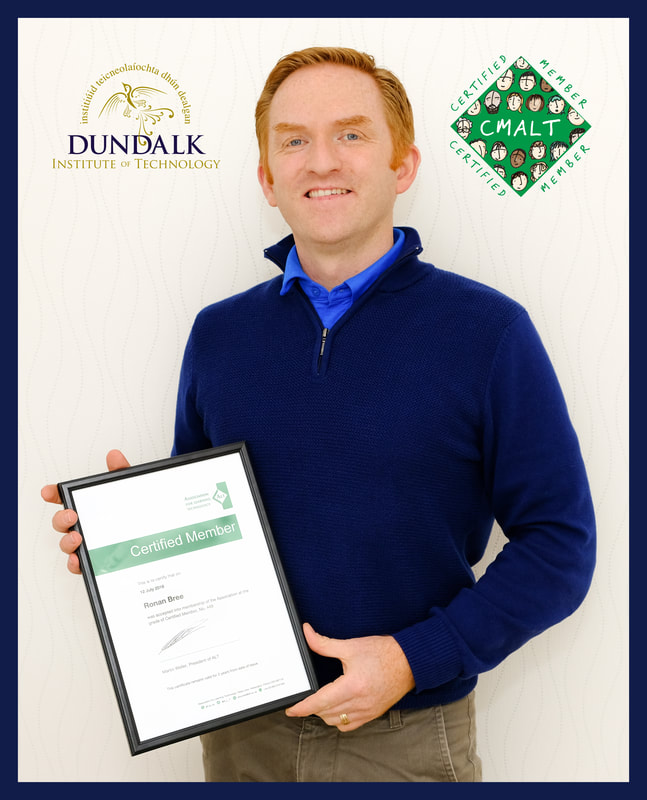
I was fortunate back in 2017 to have attended an EdTech conference where the association of learning technology spoke of their CMALT accreditation. The hosts of the conference (Irish Learning Technology Association) were offering to sponsor the application of ten people (approx €150 each), and following my submission to this call, I was selected as one of the lucky ten. I generated an ePortfolio at the time as per the CMALT guidelines, and following double peer-review was awarded CMALT in July 2018. Overall, it was a great approach to engage with...to reflect, gather evidence, and see your journey thus far...seeing your strengths and identifying areas for improvement...while undergoing the process also focuses you on where you want to go next. I found I never let this 'future focus' drop as I progressed, it really kept me in check!
CMALT accreditation lasts three years, and following this timeframe, you are asked to renew it via an updated ePortfolio. I had become aware that ALT had since developed a Senior CMALT accreditation stream (SCMALT), and remembering one of my previous assessors recommending I go for Senior, I decided to give that a go. While the update to attempt to renew your CMALT requires a certain amount of effort and time, there are extra sections required for SCMALT consideration (you can find the various requirements on ALT's application guidelines - I read this document several times!).
Reflecting on my experience of both submissions, probably the most difficult thing about working towards something like this, was actually just getting started. I found that once I had identified my areas of focus for each section and designed a way to describe/evidence/reflect them in the ePortfolio, things became much easier.
How I updated my previous CMALT ePortfolio for the SCMALT application
While I mention this point first, it was actually the final step I took. I recorded a video for the assessors and placed it on the homepage of the ePortfolio to summarise updates made, but also to support their navigation around the site. In addition, I used the short video to explain my approach to the revisions, why I was applying for SCMALT, and the main foci of the submission.
In line with the guidelines, I updated my initial contextual statement, as well as adding extra sections/boxes with 'SCMALT updates' where appropriate, to the core areas from the initial application. Taking this approach helped me to track progress in specific areas as well as including clarity for the assessors. It was helpful to reflect on advances made in the core areas too.
A reflection on my CPD; focusing on how I track my PD, and how I map it to a Framework. In addition, I presented three specific exemplars as required. This made me aware of the strategic work I was now engaged in, and how I was learning new elements and skills from this form or work.
New Specialist Area. This was a significant section. With my previous application already focusing on one specialist area, It took a while to select the area to focus on here, but I centred on a nice story I could tell of my experiences and expertise gained in recent years around a particular T&L topic.
Advanced Area. For this section, I took a holistic view on an area of my practice and the associated leadership and strategic changes implemented. It was an area that has spanned several years. This also included some sub-sections around research ethics and communities of practice.
Finally, I also revised my Future Priorities section, one that provides some light on the path ahead. It's a section worthy of inclusion as you get to consider future directions and areas you want to focus on. Of course, paths can change along the way but I know the three areas I listed in my 2018 submission were always close to my ongoing work in recent years.
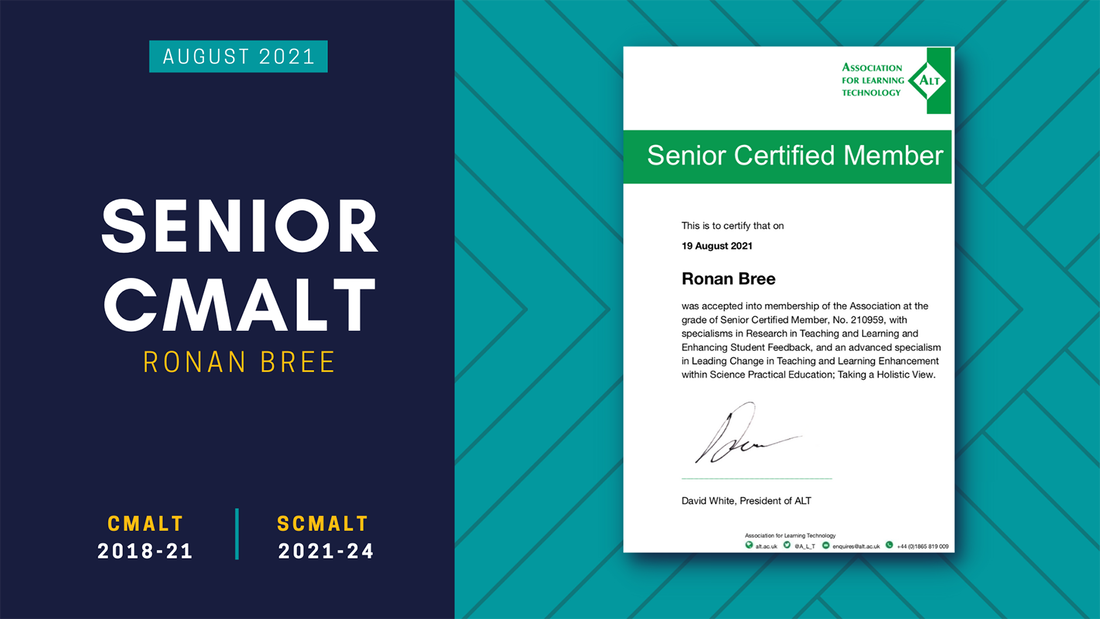
So with all the updates made, followed by plenty proofreading and toying with the layout, I submitted my ePortfolio for SCMALT consideration. The deadline was the end of May 2021, with the outcome due by the end of September. So it is something that you submit and forget about for a while. You are reminded it of it during the summer by a tweet from ALT or something along those lines. Then, suddenly, you notice an e mail with 'outcome' in the subject line. Thankfully, after a few nervous seconds reading through it, I learned my submission was successfully SCMALT accredited.
Some Key Learnings
- Make sure you establish a place or process for collecting 'evidence' of your practice, research, dissemination as you go....start this today, or even better, start an ePortfolio!
- Decide on the platform you want for your ePortfolio. For me, it was between Wordpress and Weebly...but I went with the latter. It's so fun to use, and very user-friendly. You need to be using a platform you are 100% comfortable with.
- Reflect, reflect....reflect! Essential across every piece of your ePortfolio.
- Have an accountability partner, to keep you focused...or set the deadline in your calendar that you promise yourself you will make!
- Build time in to your calendar for working on your ePortfolio....it takes a significant amount of planning, collating and tweaking. It requires several (and several more) sittings, so give yourself time to work towards your submission.
- Make a start! The step that held me back for a while...but once you get going, it will flow from there!
- Put yourself in the assessor's shoes from time to time. Go the extra mile to make sure your ePortfolio is clear, addressing the point, and easy to review....and that it adheres to the guideline document. It goes without saying - plenty proof reading!
- Reflect on your PD, the areas or themes you mention....and looking back, realise all the new and exciting advances in teaching and learning...and most importantly, how far you have come 😀.