My OER Remixing Debut

As I’ve mentioned in previous posts, I’ve grown fond of open educational practice (OEP) recently. It stems directly from listening to colleagues speak so passionately about it, combined with various research and professional development experiences which have engaged with OEP. I’m so much more comfortable with the concept than I would have been previously. While I have started to add Creative Commons licenses to resources I develop, I recently remixed, or adapted, an open educational resource (OER). It was experience I had to capture as it was such a positive experience and in a strange way, quite liberating!
The opportunity arose during an initiative I’m currently working on with a few colleagues, one focusing on open educational resources (OER). We were keen to develop a support, or guide, to help people make their resources more accessible. I initially started down my normal path, starting a mindmap, looking at what else was out there as guides in this space, sketching some mock ups etc. I had come across many supports via webinars, websites, my Twitter network and from speaking to colleagues and students. There were some great resources available - could I adapt or re-use one that was already out there, one with a Creative Commons license? Would I find one? Would it be of good enough quality? Could I embrace OEP?!
The opportunity arose during an initiative I’m currently working on with a few colleagues, one focusing on open educational resources (OER). We were keen to develop a support, or guide, to help people make their resources more accessible. I initially started down my normal path, starting a mindmap, looking at what else was out there as guides in this space, sketching some mock ups etc. I had come across many supports via webinars, websites, my Twitter network and from speaking to colleagues and students. There were some great resources available - could I adapt or re-use one that was already out there, one with a Creative Commons license? Would I find one? Would it be of good enough quality? Could I embrace OEP?!
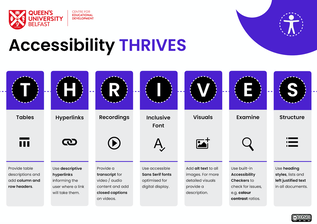
Then, one day.....there it was.....on a tweet, a screenshot of Tracy Galvin from QUB presenting a slide on ‘Accessibility THRIVES’ (a resource developed by Tracy and her colleague Jen McParland). I immediately loved the graphic and the content. Subsequently, I found QUB’s Centre for Educational Development’s accessibility blog page. The resource was CC BY-NC-SA licensed. This means it is Creative Commons licensed, with attribution required, cannot be used for commercial reasons and must be shared with the same, CC BY-NC-SA, license. Being honest, instinctively it felt strange to even consider adapting the resource….even though from all my work in this space and the license associated with the infograph, I knew the option was permitted as long as I followed the licensing requirements.
The ability to remix OER is one of its most promising benefits for instructors. Remixing means adapting the OER for your needs by editing content, reordering it, combining it with other material, and more."
University of Texas Libraries
Hence, I made a remix of the resource, ensuring I clearly added attribution and the license information (guided by the excellent @catherinecronin). I contacted the original creators to compliment their important work and explain the reason for my remix, attaching a copy of my remixed version while also highlighting the licensing being applied.
It made me feel better to take this approach. Out of courtesy and respect, I feel it's really important - in my opinion, essential. I'm a big fan of giving credit where credit is due. It builds community, lets creators know how valued their work is and promotes good open educational practice.
It made me feel better to take this approach. Out of courtesy and respect, I feel it's really important - in my opinion, essential. I'm a big fan of giving credit where credit is due. It builds community, lets creators know how valued their work is and promotes good open educational practice.
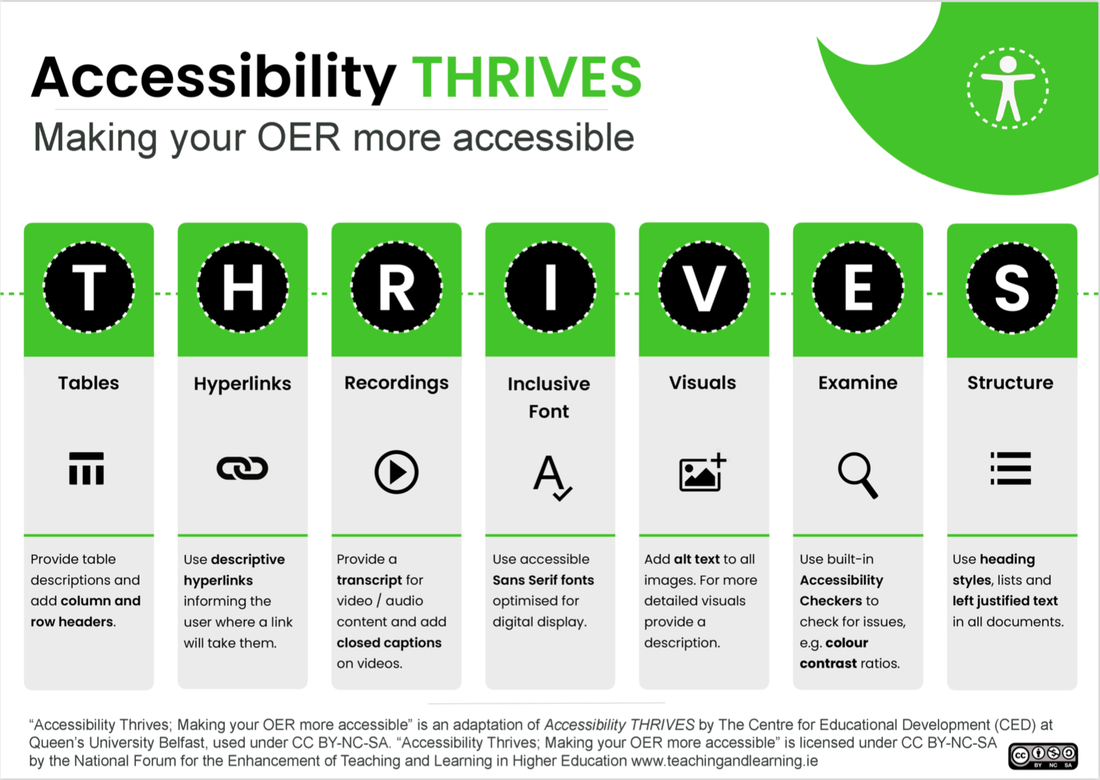
Below is my ten step guide for remixing a CC licenses OER
I hope it helps someone else!
I hope it helps someone else!
- Search for OER, and know where to look. A great start is Ireland’s new National Resource Hub.
- Check the CC license associated with the OER and be aware of its permissions and limitations.
- If the license permits adaptation, non commercial use, or required attribution etc., note these and ensure you work with these in mind.
- Remix/adapt the resource accordingly.
- Add your new title.
- Add the revised license ensuring you abide by the original license's conditions - see template text below in the grey box, this may help you. It is the text I used in my remix, coming from the National Forum's Choosing an Open License guide.
- Finalise you OER.
- In advance of posting, share it with the original authors/creators and let them know what it will be used for, highlighting the attribution, license applied etc. Always nice if you receive a positive reply.
- Use your OER.
- Feel good about engaging with Open Educational Practice!
A helpful template to use when adding your license with remixing - just edit the text in CAPS. coming from the National Forum's Choosing an Open License guide.
Bonus points if you link the license to the relevant page, and link the original resource name to where it exists online. Hyperlinking is not always possible depending on the media format (e.g. JPEG image), but important to consider.
Bonus points if you link the license to the relevant page, and link the original resource name to where it exists online. Hyperlinking is not always possible depending on the media format (e.g. JPEG image), but important to consider.
"This work “INSERT TITLE OF YOUR REMIXED/ADAPTED OER” is an adaptation of INSERT TITLE OF ORIGINAL CC LICENSED OER by INSERT CREATORS/DEPARTMENT/ORGANISATION OF ORIGINAL OER, used under INSERT CC LICENSE OF ORIGINAL OER. “INSERT TITLE OF YOUR REMIXED/ADAPTED OER” is licensed under INSERT CC LICENSE OF YOUR OER by INSERT YOUR NAME/DEPARTMENT/ORGANISATION."
The experience in my case was one of growth, again doing something I hadn’t done before. The icing on the cake was when the original creators responded to my e mail with happiness about their OER being complemented, considered and adapted. As I mentioned to them, I was "standing on the shoulders of giants"!
UPDATE - Oct 2021: ⬇️⬇️⬇️
The open education practice continues to grow...continuing to share Tracy and Jen's excellent accessibility framework.
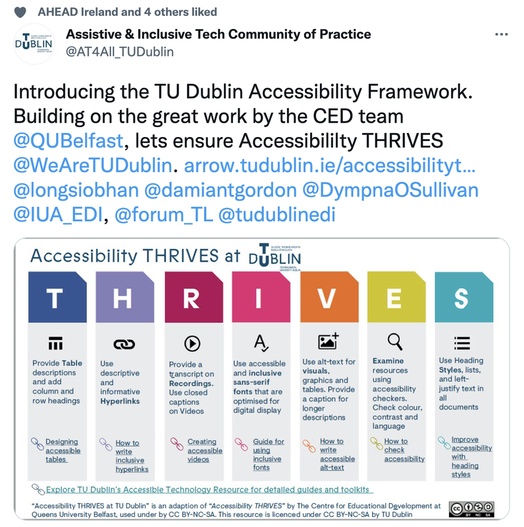
But, and this is probably the most important point....the creators of the original OER commenting below how
"this is what #OER is all about"
"this is what #OER is all about"
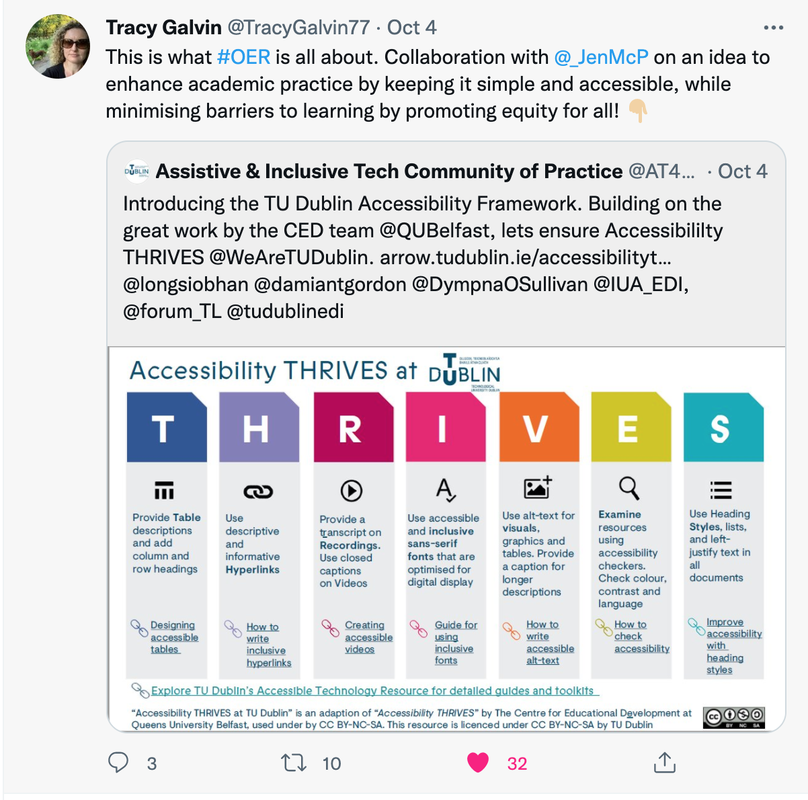
Photo by Jernej Graj on Unsplash