A Digital Focused OpenCourse - my focus = programme feedback opportunities
Context: In this post, I reflect on a recent OpenCourse I have been completing. It centres on digital capacity and one I am so glad I engaged with. No matter what level you feel you are at with digital capacity, this is a very worthwhile course. Specifically, I wanted to use this blog post to reflect and detail what I decided to focus on (programme focused feedback opportunities), and show the 'story' of the process I followed. Very worthwhile overall, and a wonderfully supportive experience.
The National Forum OpenCourse
As most will know, the National Forum support the delivery of a broad suite of OpenCourses, which each range across an extensive list of topics. I have already engaged with this form of professional development, and it left a lasting impression on me, in particular the support and energy of the peer-triad system (which was again both vital and excellent on this course).
In addition, in relation to this course, I have been very impressed by the work of the EDTL project and the team, so was very excited to enrol on this specific course. No matter what level you are at, this is such a beneficial and supported journey to undertake.
In addition, in relation to this course, I have been very impressed by the work of the EDTL project and the team, so was very excited to enrol on this specific course. No matter what level you are at, this is such a beneficial and supported journey to undertake.

The work itself, and my platform for it, fits well with several of the areas of the DigCompEdu framework. Mapping our experience to this framework was one of the first activities, and one I would recommend people consider. It can really help to further justify the work you are doing, highlight areas you need to develop more with and in the vast majority of cases, realise how well you are already doing in this space.
My Feedback 'addiction' & rationale for this work
Assessment and Feedback have been areas close to my heart for several years now. As a person, learner and a researcher, I love hearing new ways to improve. Since joining DkIT in 2009, it's been an area I've been keen to support my students with, and it's been quite a navigating journey. From working with feedback, researching this space, the literature, professional development and discussions with students and colleagues, I've really improved my feedback and supporting my learners.
I have a specific post talking through my feedback journey, and you can read that here.
I have a specific post talking through my feedback journey, and you can read that here.
Essentially, you will see the reflection linked above brought me to the benefits of collating feedback in an actionable way being needed, supporting self-reflection and engagement with actioning of the feedback. I mentioned the University of Surrey's FEATS programme, and you can read more about it in the blog post's reflection section linked. FEATS has always captured my attention.
Hence, I wanted to explore the 'MyFeedback' plugin on Moodle to see how it functions, but to all investigate it from the student point of view. Taking steps towards a more holistic approach to digital feedback provision, collation and action are all on my radar. Could this plugin support the collation of Moodle feedback across programmes? Could students be empowered to extract the key points from feedback received, and extract them across modules so they can see the 'big picture'? Well that was my goal!
To work towards achieving this goal, I felt it was firstly important to test, troubleshoot and use the platform initially, before planning pilots upon the return to the classroom. Obtaining student feedback at that point, as well as from the programme team, will also be important in order to both build awareness and identify any issues to further enhance its implementation. We are fortunate to have supportive teams in both our CELT and IT department, meaning we can have open discussions there and feed back any issues identified too.
Considering Programme Focused Feedback Opportunities
What I did here...
I commenced with the goal of investigating programme feedback options on Moodle, and to see how they all connect in to the 'My Feedback' platform/plugin.
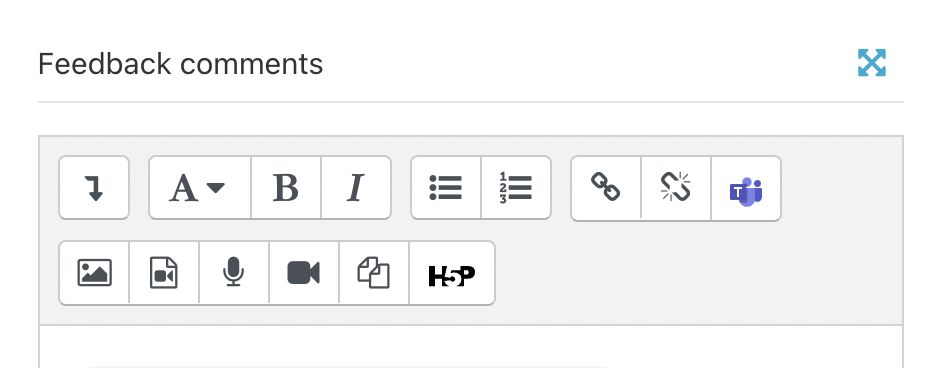
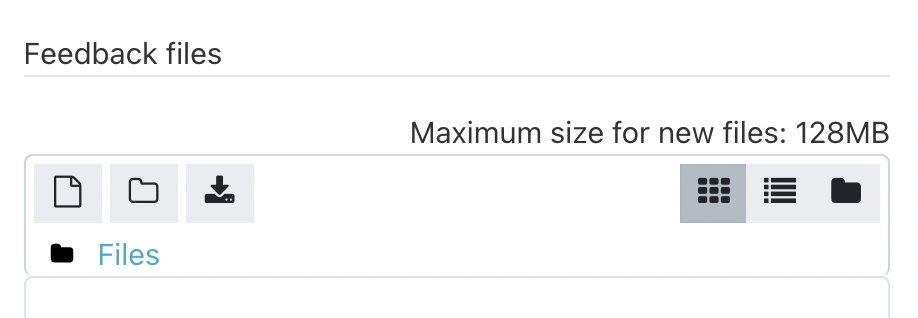
Initially, I set up a sample assignment on Moodle in lecturer role. I then swapped to the student role and submitted a sample report. Reverting to my lecturer role, I was then able to provide feedback via multiple means on the report for the 'student' to review. Numerous avenues exist, for example audio, video, text, file upload, comments etc. (see images below). Hence, I utilised each option in order to best examine how things might work and be received by students.
Initially, I set up a sample assignment on Moodle in lecturer role. I then swapped to the student role and submitted a sample report. Reverting to my lecturer role, I was then able to provide feedback via multiple means on the report for the 'student' to review. Numerous avenues exist, for example audio, video, text, file upload, comments etc. (see images below). Hence, I utilised each option in order to best examine how things might work and be received by students.
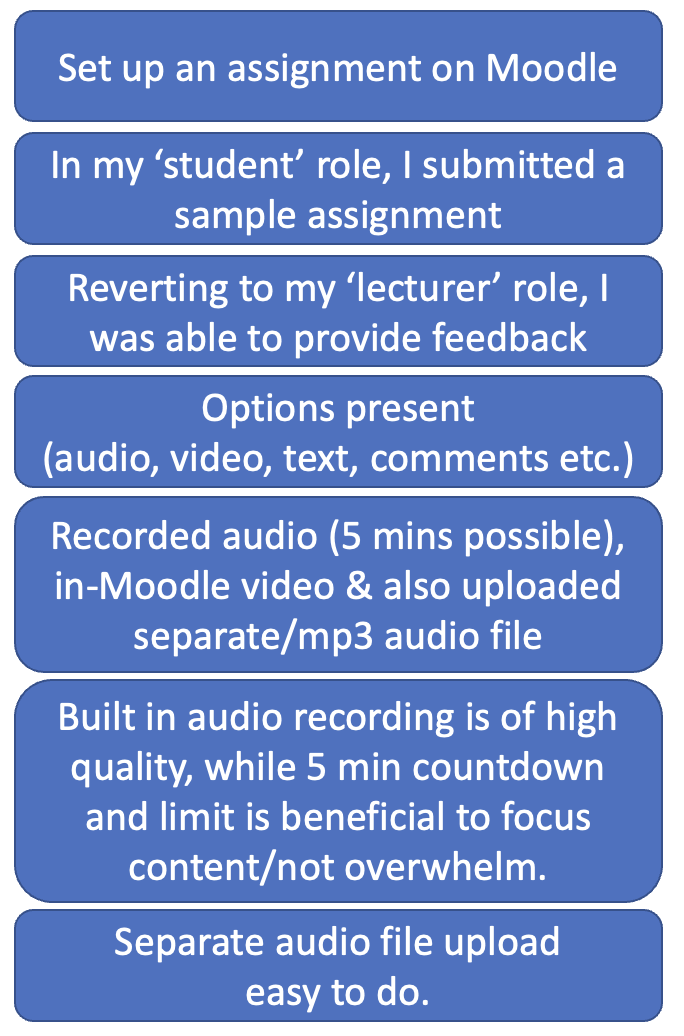
Once all the feedback had been provided, I was able to then swap back to the student role, examine how the feedback appears and to also investigate how it connects in to 'MyFeedback'.
The 'student' view
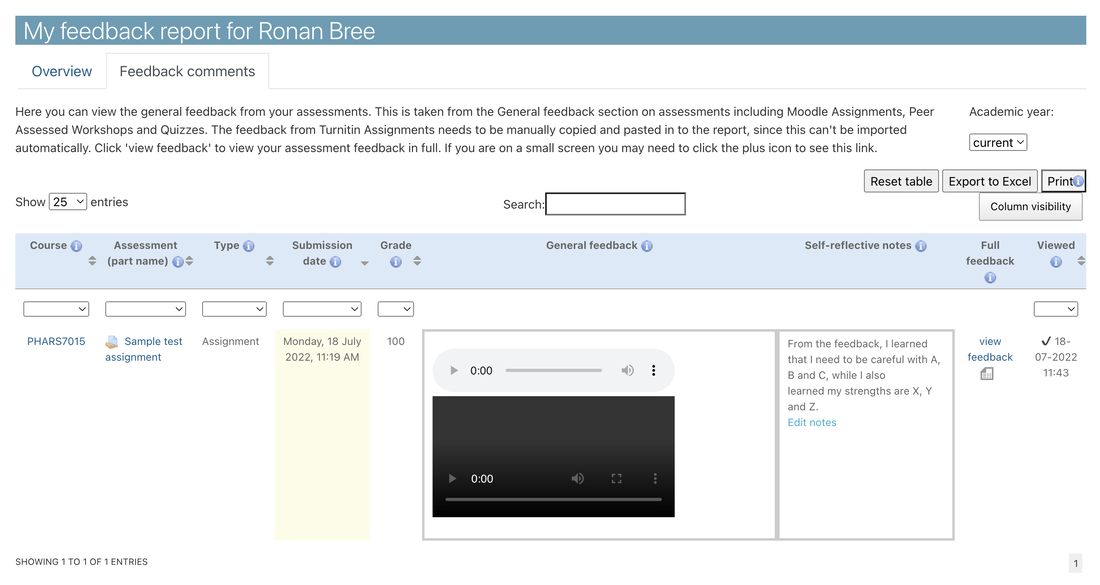
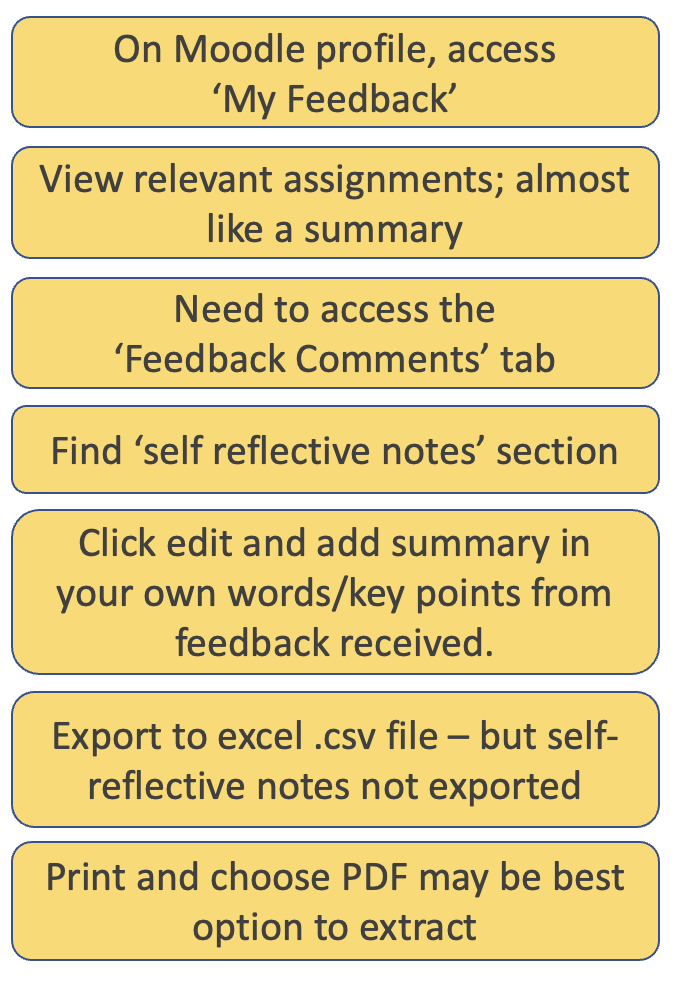
Back as a 'student', I navigated Moodle to find the 'My Feedback' option in my profile. Here, I could see the relevant assignment(s), almost in a summary way. From here, I could also access the relevant grading page to view the feedback received. I then needed to access the 'Feedback Comments' tab where several column headings exist, as well as the feedback received negating the need to visit the assignment page.
Of particular interest to me here, was finding the 'self-reflective notes' column. Here, I had the option to add in comments based on feedback received, almost like a summary of the key points of the feedback, areas to improve etc. It's up to the student what they input here.
There are options to export as a .csv file or print the contents, something I will come back to below.
Can 'MyFeedback' actually help learners?...
Overall, it's a great plug in and one we should encourage staff/students to engage with across their programme/modules. It has the capacity for learners to be empowered to extract key points from feedback across all their Moodle assignments, helping them see the bigger picture on their strengths and areas for improvement that may be common across various modules/lecturer feedback.
There is potential here for students to have everything in one place, an aspect that came through in a recent national survey. A good example of this is when I reflected on previous audio feedback sent as an audio file by e mail to my students. One later said that on their bus commute a few weeks later, while listening to their library on shuffle, my feedback file started playing in their earphones! I'd prefer not to be 'landing' in their playlists, and having it all in the myFeedback lets them collate it, reflect on it etc. when they wish, and in the one place.
There is potential here for students to have everything in one place, an aspect that came through in a recent national survey. A good example of this is when I reflected on previous audio feedback sent as an audio file by e mail to my students. One later said that on their bus commute a few weeks later, while listening to their library on shuffle, my feedback file started playing in their earphones! I'd prefer not to be 'landing' in their playlists, and having it all in the myFeedback lets them collate it, reflect on it etc. when they wish, and in the one place.
Any major considerations/things to note?
From my use of the plug in on Moodle, I did come across some areas I feel are worth being aware of....not being negative here, but just building awareness of some points to note if you are getting started with it like me....
- Browser considerations - On my Mac system, the audio feedback would only play on google chrome, as opposed to Safari.
- Video/Screencast feedback - The video feedback does not appear to playback when in student role, in either browser tested.
- Exporting your self reflective notes - when you extract as a .csv file, the file created does not extract the self-reflective comments which for me are the most important. As a workaround, the student could print, and then select 'as a PDF', and save the file.
- Non-Moodle feedback? - If some assignments and the associated feedback, are carried out and received outside of Moodle, how could a student integrate the feedback notes in to the MyFeedback plugin? e.g. add their own 'assignment' perhaps?
- Finding it! - Students will need support in how to self-reflect on the feedback, and how to extract the key actionable points. The 'Feedback Comments' tab, on the students' 'MyFeedback', which is accessible on their 'Moodle profile' all means this is a bit 'buried' and not easily located without some support.
- Long term reflection? - Can students see the feedback from previous years if they log in to last year's Moodle, or could there be a way for it to carry through?
Integrating for the longer term?
When I began to consider the longer term, programme wide integration of MyFeedback, some points came to mind....
- Promote Moodle assignments - and using some of the feedback options available in the platform.
- Work with students on finding the feedback comments section in MyFeedback.
- Support students with self-reflection, note generation based on feedback (ideally build this in to an assessment, i.e. next submission provide a self-reflection of key points). Aim for an action based approach to be considered.
- Provide opportunities for dialogue, discussions around the feedback itself and the platform use.
- Build awareness in students of how to work with the plugin and how to truly reap its benefits (for example, inputting notes, key points during the year, and exporting the page to review across all modules).
- Highlight the value of engagement and action with feedback, and with the associated tools and dialogue.
Overall, would I recommend a National Forum supported OpenCourse?
What's not to love? You get to be part of a wider group across the HE sector, with numerous opportunities to network and share. You are incredibly supported by the group of course facilitators. Complementing this, you are a member of a peer triad group, which truly is a real cornerstone for learning and motivation. I have been so inspired by my fellow triad members on this OpenCourse, with support, understanding, positivity and encouragement filling our meetings. Listening to different projects, viewpoints, experience, expertise is invaluable and the positive comments and suggestions you get from the triad team can make such a difference in your motivation and work too. Your colleagues can see things that maybe you didn't notice or consider, or perhaps they have tried and tested something similar before. All in all, it's been a wonderful journey to have made such strong connections with colleagues and leaders from other institutions.
No matter what your interests are, you'll certainly find an OpenCourse for you, and as a form of PD in Higher Education, it is truly an exceptional model (developed, supported and set up by the National Forum, with all aspects open licensed).