Evidence Based Reflection
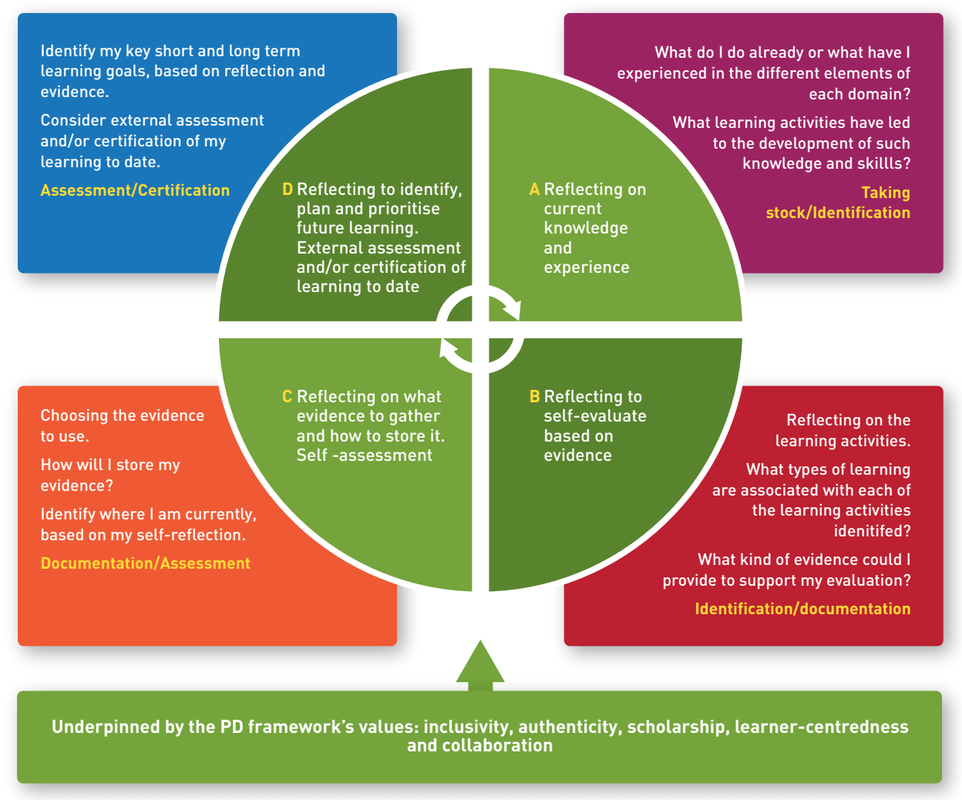
The Framework itself refers to Evidence Based Reflection as a cyclical process. I agree with this, as ultimately in order for reflection to actually work, it is a process you need to established in a sustainable manner - and a cyclical mindset around it is important to develop.
I feel that as I move forward, I am experienced now (and hence more confident) to reflect on each day or event, and identify what worked well, or what can be improved. I somewhat seem to find myself doing that regularly already (it was something we were urged to do during the DkIT MALT course) but now, via this ePortfolio/blog, I have a platform to document and record it. Also, a previous ePortfolio I put together for a separate accreditation was focused on 'Background/Evidence/Reflection', and hence I practiced focused reflections there also which helped me further develop that skill.
What has impacted me when I started to reflect on my previous PD, is the diverse and broad range of it - and how fortunate I have been to work on so many initiatives, each of which has helped me develop new skills or ways of thinking. In order to illustrate how the NF Framework's model of evidence based reflection works, I am going to focus on a specific experience to show the cycle in action.
A: Reflecting on Current Knowledge and Experience.
I experienced that students were finding it difficult to find time to read through the laboratory manual before practical sessions, and hence felt unprepared for their tasks upon arrival. Having also engaged with research literature on the benefits of pre-lecture and pre-practical preparations, I felt well informed that it would be worth piloting a customised pre-practical event via video. I had skills around technology and software, mostly self-taught, but felt I had enough to engage with the project. I had a plan!
B: Reflecting to self-evaluate based on evidence.
Learning activities centred around a (short!) pre-practical video and carrying out a formative app-based MCQ quiz before arriving to the practical session. There was also an associated learning activity for me, as from the quiz results, I could see specific areas needing review before commencing the experimental work! Evidence wise, I performed a pilot with a student group in order to establish whether it was worth engaging with in widespread manner. In order to evaluate this, evidence would be required in the format of feedback from the students engaging with the pilot - in addition to inputs in my reflective journal on the lecturer experience.
C: Reflecting on what evidence to gather and how to store it, self-assessment.
For this pilot, I decided to engage with anonymous, ethically approved, mixed-method surveys as well as subsequent focus group discussions with students. Secure data management, ethics and anonymity, confidentiality all had to be considered. I hoped to publish the evidence as an output, that would be another form of personal development as well as inform colleagues of this approach. YouTube accessibility statistics, and reviewing the answers to the quiz, would also provide an idea of the level of engagement with the resource and aspects needing improvement in future iterations.
D: Reflecting to identify plan and prioritise future learning. External assessment and/or certification of learning to date.
Reflecting on the results of this pilot, and the associated journal article, I wanted to spread this concept across modules - versus being just a pilot experience. Hence I developed a plan around with that centred on creating a YouTube playlist of videos to meet this goal, and rolled this out with student groups. I also the presented the findings at a national conference, having engaged with a colleague who took a similar approach in a different discipline. Reflecting on how I wanted to plan and prioritise next steps, I wanted to complement my recorded video clips, with generated animations and this is something I am learning and developing further at the moment. Enjoying it so far.
I also want to prioritise extending the licensing of resource I generate a bit more, so have been reading around Creative Commons and the NF licensing toolkit.
Overall, it is clear that my reflections at the end of this cycle are actually kickstarting the next one! "
Background reading referred to above:
- Dunne, J., & Ryan, B. (2012). Irish Journal of Academic Practice Learning in the Science Lab: a New Approach Learning in the Science Lab: a new approach. Irish Journal of Academic Practice, 1(1). Retrieved from http://arrow.dit.ie/ijap/vol1/iss1/2
- Seery, M. K., & Donnelly, R. (2012). The implementation of pre-lecture resources to reduce in-class cognitive load: A case study for higher education chemistry. British Journal of Educational Technology, 43(4), 667–677. https://doi.org/10.1111/j.1467-8535.2011.01237.x
In the short audio clip below, I discuss my approach to the domain 'Personal and Professional Digital Capacity' and its associated elements.
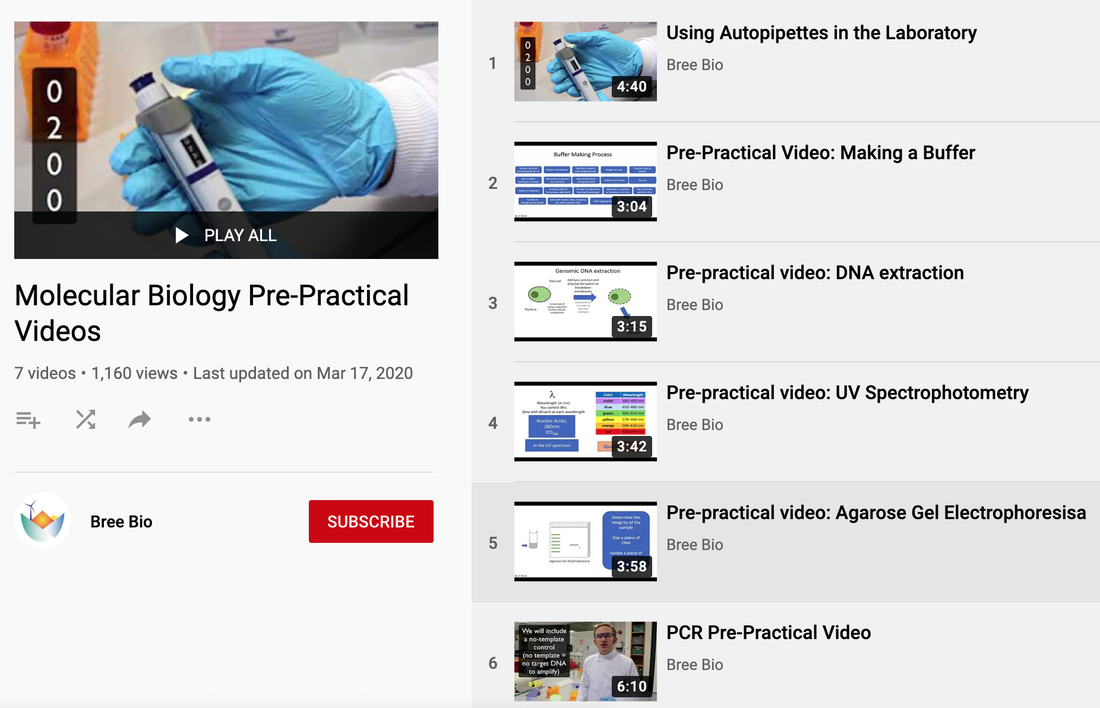
YouTube Playlist created